Visit to Hitachi seaside park
Greetings from the Hitachi National Seaside Park we visited in March 2022. From right to left: Elizabeth Gamarra, Ken Inoue (on top), Fujiko Amano, and Sukehiro Hasegawa.
Former Foreign Minister and Ambassador to Japan Charles Murigande of Rwanda to Japan made a critical review of the developments in Rwanda since its genocide in 1994. He was joined by Hiroshi KATO, Former Vice President of Japan International Development Cooperation Agency (JICA) and Professor at the International University of Japan. Please click here for its video recording.
Former General Manager of the North Eastern Army of the Ground Self-Defense Force, Goro Matsumura, presented the current and future prospect of Japan’s international peace cooperation activities, the global trend of partnership peace cooperation activities, two approaches to national security, and the relationship between Japan’s national security in general and international peace cooperation activities as well as the future prospect.
A group of GPAJ members: Ken INOUE, Fujiko AMANO, Elizabeth Gamarra, Naoko KUMAGAI and Sukehiro HASEGAWA, visited the Kairakuen Garden in Mito and National Hitachi Seaside Park in Ibaraki on March 15 and 16, 2022.
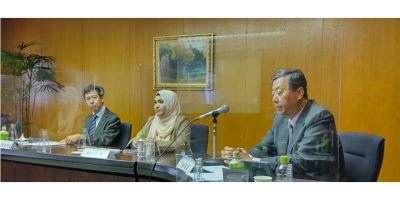
Professor Suzuki, President of the National Federation of UNESCO Association of Japan, explains the challenges faced by Southeast Asian countries, particularly Indonesia and Malaysia. His presentation was followed by a lively discussion participated by Ambassadors Shinyo and Yanagisawa as well as Messrs Nakayama and Kuroda, and Ms. Elizabeth Gamarra.
Professor Aigul Kulnazarova will explain why revolutions take place in the post-Soviet region, most recently in Kazakhstan, on Tuesday 8 February 2022 from 20:00~21:30 Japan Standard Time. She will be joined by David Chikvaidze, Chef de Cabinet, UN Office at Geneva and Lise Howard, President of ACUNS. For participation, please register from the link below by February 7. https://forms.gle/oPRwsLY4Jg411A7V9
Global Peacebuilding Association of Japan (GPAJ), and Kyoto Peacebuilding Center (KPC)
present Mr. Koji SAKANE, Chief Representative, Japan International Cooperation Agency (JICA) Sudan Office and Director of GPAJ, “Democratic Crisis in Sudan” Saturday,12 February 2022 at 20:00 hours Tokyo time. If you are interested in, please contact Fujiko AMANO (fujiko.amano[@]gmail.com) for registration.
Global Peacebuilding Association of Japan (GPA-J), Kyoto Peacebuilding Center (KPC) and ACUNS Tokyo Liaison Office presented Angela Kane, Former High Representative for Disarmament Affairs and Under-Secretary-General for Management of the United Nations “Winning and Losing the Nuclear Peace: Looking Back on Arms Control and Non-Proliferation” Saturday 29 January 2022 at 10:00 hours Tokyo time and Friday 28 January 2022 at 20:00 hours Washington DC time.
Please click here for a full report in English which was compiled by Maciej Witek.
If you want to participate in the seminar, please send your name and email address to
to Mr. Ken Inoue (camelworld[@]aol.com). The Secretariat will send a Zoom link to all
members a few days before the seminar.
Global Peacebuilding Association of Japan (GPAJ), Kyoto Peacebuilding Center (KPC) and Academic Council on the United Nations System Tokyo Liaison Office (ACUN\s-Tokyo) in association with the Association of Former International Civil Servants of Japan (AFICS-Japan) held a seminar on “Legacy of Boutros Boutros-Ghali and Omnilateralism” on Saturday, December 4, 2021, Japan Standard Time from 20:00 to 21:30 hours.
Online Forum Saturday, 13 November 2021 Japan Time 10:00 – 18:00 Japan time
organized by the Global Peacebuilding Association of Japan (GPAJ) and supported by Kyoto Peacebuilding Center, ACUNS Tokyo and AFICS-Japan. Please contact Prof. Naoko Kumagai (naokokumagai71{@}gmail.com) for registration.
Please click here for the UNDP video.
(日本語) 長谷川理事長は、人間に脅威をもたらすもう一つの要因として、人間の貪欲性を挙げ、新たな世代の人々にとっても脅威を生み出すことになると説いた。そして、人類が自ら内蔵している脅威から、人々の生命と安全を確保するために、日本が「人間の安全保障」の概念を推進していくことは重要であると述べた。詳細はここをクリックして下さい。